
Close
A solar photovoltaic system harnesses sunlight to generate electricity through photovoltaic cells, which are typically composed of semiconductor materials such as silicon. When sunlight strikes these cells, it triggers the release of electrons, creating an electric current. This direct current (DC) electricity is then converted into alternating current (AC) electricity via an inverter, suitable for powering various appliances and feeding into the electrical grid. By tapping into solar energy, these systems offer a sustainable solution that reduces reliance on fossil fuels and mitigates environmental impact.
In commercial settings, solar panels are deployed in various configurations to suit different needs. For instance, commercial solar panels employ numerous solar arrays installed on rooftops, carports, or the ground, efficiently generating electricity to meet the building’s energy demands. These systems are crucial for businesses looking to embrace clean energy while minimizing operational costs and environmental footprint.
There are different kinds of photovoltaic systems, namely grid-tied, hybrid, and off-grid systems. These solar configurations can be used to address the client’s needs accordinglyd
These systems are linked to the utility grid, enabling them to generate electricity during daylight hours. Any surplus energy not consumed by the building is fed back into the grid, often earning credits through net metering. Grid-tied systems are renowned for their cost-effectiveness and the opportunity to sell excess electricity back to the grid.
While not strictly a type of solar system, UPS systems are designed to provide backup power during grid outages or disruptions. Solar-powered UPS systems utilize solar panels to charge batteries continuously, ensuring a constant power supply even during extended grid outages. These systems are commonly used for critical applications such as medical facilities, telecommunications, and data centers where uninterrupted power is essential.
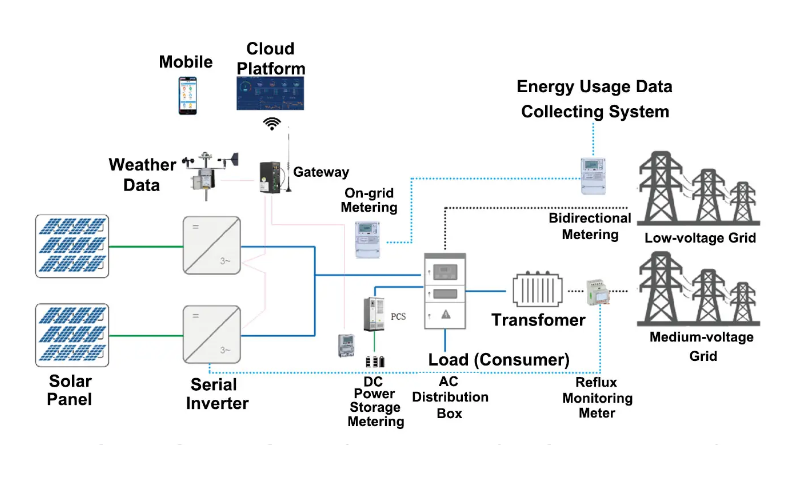
Hybrid solar systems combine elements of grid-tied and off-grid systems, offering both grid connectivity and battery backup. These systems can operate connected to the grid, allowing homeowners to take advantage of net metering and access backup power from the grid when needed. Additionally, they incorporate battery storage to store excess energy generated during the day for use during grid outages or periods of peak demand. Hybrid systems provide the flexibility of grid-tied systems with the security of off-grid backup power.
Off-grid solar systems operate independently from the utility grid. They include solar panels, battery storage, charge controllers, and inverters to generate and store electricity for use when sunlight is unavailable. Off-grid systems are common in remote areas where connecting to the grid is impractical or cost-prohibitive. They provide energy autonomy but require careful planning to ensure a reliable power supply, especially during periods of low sunlight.
